|
| An early Death Star battle scene, minus effects, is reviewed in US post production- circa late 1976/77. |
When we all think back to our original first viewings of STAR WARS on the big screen in 1977/78, we remember the great characters, the special effects, and, most importantly, the fast paced visual storytelling. The latter would be achieved thanks to the precision skills of three American editors working with George Lucas: Paul Hirsch, Richard Chew and the much admired in the film community wife of the director, Marcia Lucas- their combined, youthfully spirited final results winning them the all-important, well deserved Academy Award a year later.
 |
| John Jympson. |
However, back in 1976, there was another editor who worked on the film, whose early contributions have either been ignored or denigrated: the veteran British talent that was the late John Jympson. Jympson's had a rough time of it these last few years in early STAR WARS behind the scenes history. Hired by Lucas because he had been a fan of his earlier revolutionary and influential work with director Richard Lester on the now legendary, surreal music day-in-the-life biography for the seminal British pop band,
The Beatles: A HARD DAY'S NIGHT, as well as the classic Stanley Baker starring actioner ZULU (which had equally impressed producer Gary Kurtz), and also because he was a popular and respected talent in the British film industry- no stranger to a wide variety of movies: from drama (DEADFALL, FRENZY), to action (KELLY'S HEROES, the now classic WHERE EAGLE'S DARE, plus the later HIGH ROAD TO CHINA) and comedy (renowned for his work on A FISH CALLED WANDA) - Jympson seemed a strong choice, as well as a cost effective one, to work and shape the finished film, as well as being someone who had prior worked with
Star Wars UK cinematographer Gilbert Taylor (on the aforementioned A HARD DAY'S NIGHT). But soon enough, as filming was underway at London's Elstree Studios in Spring to Late Spring of 1976, it seemed that the match of old and new film-making talents, of experienced and building experience creative instincts, was not to be a perfect one-the cutting work done by Jympson apparently against Lucas take usage requests and lacking the required adrenaline charged excitement and pace pulling that the director hoped for, resulting in their having a stained relationship (Jympson seemingly resenting comments from a young whipper-snapper and allegedly often quite aggressive in defending his editing choices) - a situation which was worsened after the young American, quietly stubborn and used to doing things on his own after years in film school, was often re-cutting things at the weekend, sometimes without his editor's knowledge.
 |
| Raw footage of which rough animation guides would be added for laser blasts. |
With a London visiting Alan Ladd, Jr., already under lots of pressure from the FOX Board of Directors for initiating STAR WARS for filming in the first place, and secretly hiding his worries and disappointment at what footage had been presented so far (yet staying completely and admirably committed to Lucas as a filmmaker, who has promised to recut the footage himself), Jympson, the seasoned UK veteran who surely had not been as well briefed on the film as he might have been, would be "let go" by June 1976 (Jympson had complained vociferously about working with Lucas, but Ladd ultimately sided with the director). At this point, editing had relatively stopped due to pressures of time - the July 1976 Elstree filming period soon planned for termination by the FOX board (but ultimately rushed to completion - four weeks work compressed into two).
 |
| Rising star Paul Hirsch joins the editing team. |
From these difficulties, a depressed and angry Lucas returned back to the States and, with Marcia Lucas, began disassembling all the previous edited materials. Literally having to start the editing cycle from scratch by August 1976, with post production time not on his side, Lucas would soon pull in the quick-fire instinctive talents of Richard Chew (his original first choice for the project who had now luckily become available for a time window), his creatively blossoming wife Marcia, followed by Paul Hirsch, taking the film on by himself after five months, to bring the film back on course to his perceived, if restricted, vision. All three editors would get to see Jympson's 'first cut', primarily as an example of the kind of film that George Lucas's
didn't want, the latter recalling to STAR WARS INSIDER magazine in 2011: "The first cut was oddly inconsistent. Some of the scenes were over-cut, some too slow. Many of the cuts 'bumped,' that is, they weren't executed elegantly or smoothly." Richard Chew revealed on the 2004 BUILDING EMPIRE documentary that what he saw didn't have the kinetic rhythms that Lucas ultimately wanted. Like many of the other UK behind the scenes personnel that had worked on the filming, and with no completed razzle-dazzle ILM effects to behold, Jympson was likely confounded and perhaps unable to fully grasp the nature of the film at that time (what with its hairy Wookiee and Bristol-voiced Darth Vader roaming the
Death Star!), as well as the then relatively shy Lucas's ambitions and intentions, thinking it to be a small-scale kiddie flick rather than the
space opera fantastic it would later become.
With the passing of the years, Jympson's original role as the film's editor has even been
altered by LUCASFILM, who'd now refer to him in some of their written materials as being just the film's UK 'Assembly Editor', though someone of his talents and experience would certainly
not have been hired just for that function. No, Jympson was the original editor of the film with Lucas,
before the Bantha poo-doo hit the fan!
 |
| July 1976. Gary Kurtz handles Second Unit filming as the Elstree crew rush to finish the UK shoot. Image: via STAR WARS ARCHIVES Facebook page. |
With the 2000's revelations of his existence and his cut-short contribution to the original film, Jympson's early work on the first STAR WARS has been the subject of much debate by fans and historians, but the simple fact is that none of his assembled 'First Cut' footage would ever be seen in its entirety past Autumn 1976, nor is it apparently in existence-having aforementioned been disassembled by Lucas and the new editing team. Materials comprising early B/W Cantina footage considered and linked to Jympson's name, recently available on Blu-ray and earlier on CD-ROM in the nineties, as well as what's in the so-called "The Lost Cut" (found in the LUCASFILM vaults by Dr. David West Reynolds), is material likely not to have been compiled by Jympson after all- considered by archive expert/author J.W. Rinzler as being part of another first rough cut attempt likely generated
after the editor's departure, the resultant footage having been part of the shaping of the movie when its post production was handled Stateside, and following the (mostly) completed principal photography handled in London.
 |
| Early footage being viewed back in the day at Elstree- circa July 1976. Image: via T'BONE's STARWARZ.COM site. |
Looking back and acknowledging that fascinating aspect of time, before STAR WARS
became the STAR WARS we know and love today, I think fans should no longer condemn Jympson or his work on it. Instead, we should begin to attempt to understand his likely thoughts, feelings and choices of scenes back in the day, which had likely been in line with the kind of film-making attitudes and styles that were popular of that period, but soon going out of fashion with the likes of Lucas and other new-age visual storytellers. Some people just don't fully understand or appreciate science fiction or space fantasy, nor have it hardwired into their brain patterns, in quite the way Lucas would. And that isn't anybody's fault...
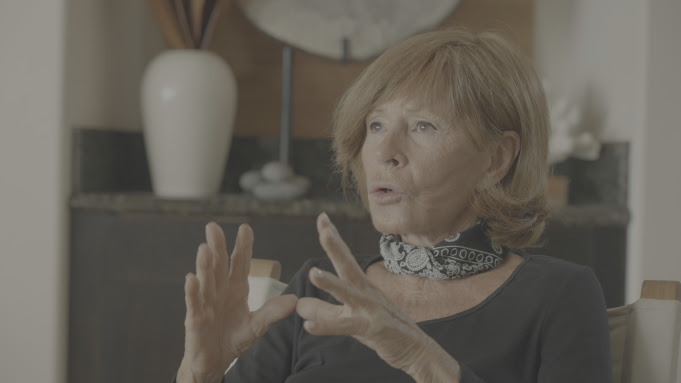
An interesting look at the film's shaping in the final editing:




.jpg)