Showing posts with label MARCIA LUCAS. Show all posts

Saturday, 30 May 2026

GOODBYE, MARCIA LUCAS...


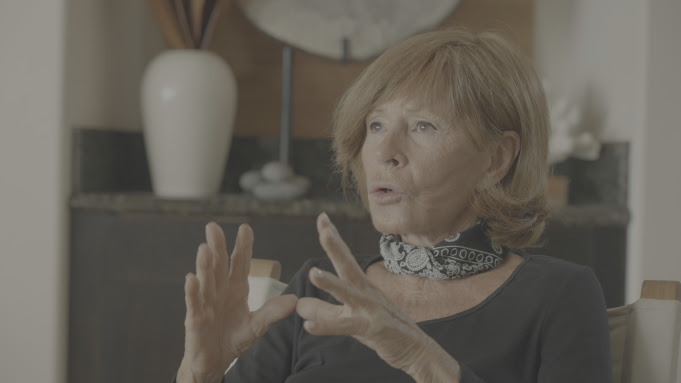
STAR WARS AFICIONADO was deeply saddened by the news that Marcia Lucas, one of America's finest Academy Award-winning film editors, and a vital contributor (in so many ways) to the success of the original Star Wars Trilogy, has passed away at the age of 80. She was the heart of the original Lucasfilm family and truly the 'First Lady' of the saga, whose real contributions to the films that made us all what we are have only properly come to light and been celebrated in the past ten years with her warm return to the Hollywood film community. Marcia's talent and personality will be greatly missed...

STAR WARS AFICIONADO WEBSITE: BEHIND THE SCENES: THE MARCIA LUCAS FACTOR!

Marcia's film-editing skills and storytelling instincts made her a vital asset to her husband (who called her the film's 'secret weapon') when creating/making the Star Wars saga... 

Deservedly winning an Oscar for her work on Star Wars in 1978, alongside her co-editors Richard Chew and Paul Hirsch, presented by Farrah-Fawcett Majors.

With the 50th Anniversary of the original Star Wars soon upon us, her passing is even more sad and poignant. Let us hope that her vital contributions to the film that launched a phenomenon will be officially explored and celebrated further for the future...

A sadly all-too-meagre official entry on her passing: Marcia Lucas: 1945-2026 | StarWars.com

Marcia Lucas Dead: 'Star Wars' Editor Was 80

Marcia Lucas dead: 'Star Wars' editor and former wife of George Lucas was 80


The memorable career of Marcia Lucas.


Friday, 26 September 2025

AN 'EMPIRE' AT 45: 'HOLLYWOOD ROYALTY' ISSUES...

Fun with Carrie and Gary in April, 1979.

Often seeming frail and acting erratically with the start of studio filming in London, Carrie Fisher's building drugs addiction off camera would become a serious health concern for the production team during The Empire Strikes Back. With such a delicate subject to broach to the mood-changeable Fisher, George Lucas is unable to get producer Gary Kurtz (at times acting on set as an unofficial kind of 'chaperone' to the actress) nor the film's unofficial shadow producer in Howard Kazanjian to converse with her about the problems. Thankfully, Marcia Lucas ultimately comes to her husband's rescue, cleverly using a screening of Fisher's dailies footage as Leia to subtly highlight her personal problems. The results are successful, with Fisher's health, improved weight and onscreen performance better by the mid-point of the film's shoot.

Make-up artist Kay Freeborn always found Carrie a mercurial figure on set.

Fisher was always fascinated by film camera technique during the shoot.


Friday, 22 December 2023

BEHIND THE SCENES: THE MARCIA LUCAS FACTOR!


George Lucas, needing morale support, with then wife Marcia, perched against a Djerba beast background player. An image taken during the final days of Tunisian location filming for Star Wars in early April, 1976.

Behind every great man, there has to be a great woman, as the song goes, and back in 1976 as writer/creator George Lucas developed, and filmed the original, difficult to make Star Wars he had the thankful support and backing of his wife Marcia Lucas during many affecting times, herself a much in-demand and trusted filmmaking talent within the world of editing, and known for her strong creative instincts and individual flair. She was and is a gregarious person who recognised peoples' talents and knew how to bring them out to the benefit of everyone, especially in Hollywood circles, where she was much admired by the likes of director friends including Martin Scorsese and Brian De Palma, who'd use her editing talents/opinions for their own groundbreaking projects. Both George and Marcia would prove to be a popular couple during the period they were together, whose chalk and cheese natures seemed to blend perfectly in the early to mid seventies era of innovative and unforgettable movie production. Marcia would also be a key voice in editing and helping George lock in the 'spirit' of his hit comedy, American Graffiti.


Marcia Lucas's Star Wars-related postcard from Tunisia to Lucy Autrey and the Parkway team in 1976.

Though not originally to have been part of the film's editing (instead to have acted as a consultant), during Star Wars 1975-1976 pre-production she favoured the casting of Hamill, Ford, and Fisher, was key to the development of the Force in the movie's original script, which she found fascinating (even writing some of the extra dialogue needed during Kenobi and Vader's duel), helped her husband realise that Kenobi's death was indeed vital to keep the film's drama in the final script (and not leave a great actor like Sir Alec Guinness with nothing important to do), whilst in her own editing high ground, she brought in the idea of 'wipes' transitions for scenes (used effectively for TV commercials at that time). 

Designing both the Lucasfilm Ltd  and ILM logos. Marcia travelled to Tunisia and was regularly at London's Elstree Studios. It was alongside her husband looking at the film's dailies that they knew that the assigned UK editor John Jympson wasn't picking the right take prints to be used in the editing process before his role in the film was terminated in July 1976. Ever gregarious, she regularly had dinner with the film's main cast, especially Sir Alec Guinness, whom she often found scandalous and funny away from the set (George sadly never attended the dinners). She was greatly impressed with Carrie Fisher (loving her spontaneous, clever wit) and Harrison Ford, who looked every inch the 'soldier of fortune' to her. It was Marcia, alongside US casting advisor Fred Roos, who championed Luke Skywalker to be played by Mark Hamill.

When a desperate-for-help Lucas needed Marcia's editing skills and keen eye for character after the replacement of Jymoson (whom Marcia felt used too broader takes of actors performances that did not bring a sense of reality to the piece and felt too humorous), she was key to making the final Death Star space battle as tight and exciting as possible in what became a monumental task (generating the idea and tension of the Death Star preparing to fire at the Rebel Base, alongside fellow editor Paul Hirsch's contribution - an edge-of-your-seat countdown to the finale), of which ILM needed the assembled footage as quickly as possible for ongoing model filming. She also fought Brian De Palma's wanting George to remove the concept of the Force from the film, which she was adamant should stay (De Palma may even have had his friend Paul Hirsch remove some of its references in Post Production, most of which were then re-instated by a determined Marcia). Beyond getting the hilarious moniker of 'The Queen of Death' in killing off characters across the Star Wars saga during editing, Marcia also recognised the value of small unique moments of humour, like the Mouse Robot sequence showcasing Chewbacca, which was almost entirely excised from the film before she put her foot down.

Visiting the Death Star hangar bay set at Elstree circa May/June 1976, Mark Hamill demonstrates his then ongoing toe infection to Marcia and colleague. Image: Robert Watts.

Cast and crew gather at the Elstree Studios bar/restaurant. Image: Robert Watts.

Fondly known by the 1977 Lucasfilm team as 'the heart' of its expanding family, and recognised as 'the smartest pair of hands in the galaxy', Marcia was sadly not able to work on the editing for The Empire Strikes Back (part of a sequel series that she had no idea George Lucas had any plans for beyond what was thought to be the one-off 1977 film) due to other commitments (though she clearly saw and/or gave opinions during the film's post production process, and visited the London Elstree Studios filming at least once in mid 1979, alongside her then husband) and to also start looking after her and George's adopted baby, though she was able to come back to help her again desperate husband for a short period on Return of the Jedi's end of Post Production period, despite having now retired from the editing field, when it's original cut (crafted by director Richard Marquand and his own specially chosen editor Sean Barton) needed a major creative boost in key dramatic areas, especially linked to Mark Hamill's scenes as Luke Skywalker, and his eventual destiny as a Jedi, plus the vital moment when Vader transitions back to Anakin Skywalker and defeats the Emperor. Marcia would further be a part in reshaping the film's already edited Sail Barge battle, so as to bring viewing clarity.


Earlier this year, Marcia Lucas was a key contributor to a documentary series linked to the making of the Original Trilogy, which aired on Vice TV (July 12th): 

Vice TV-Nacelle ‘Star Wars’ Series Lands 1st TV Interview With Lucas’ Ex-Wife – Deadline


Filming at the top of the Sidi Driss hotel in Tunisia with Mark Hamill looking down into the sinkhole, and watched by the crew (including Marcia Lucas, centre, with Gary Kurtz). Image: the Ben Ageros Collection.

Visiting the location specifically to bolster her husband's low spirits with the problematic start of filming Star Wars, Marcia watches George direct a Landspeeder motion sequence.


 Marcia, at bottom left of image with Gil Taylor, and Meredith Kurtz, as the crew (including George Lucas, Anthony Waye and Ann Skinner), from a small scaffold, film the Landspeeder entrance into Mos Eisley at Djerba, Tunisia, at the end of March, 1976.

Conferring with, and enjoying the company of, Garrick Hagon and Mark Hamill, watched by George, on the last day of location principal photography at the Djerba fishing village, Tunisia- April, 1976.


Both Marcia and George had a natural passion for the craft of film making and editing and were much respected for their successes in the 1970's.

A proud Oscar winning Marcia with her husband at the 1978 Academy Awards, enjoying the success of the original Star Wars.

With fellow Star Wars editors Richard Chew and Paul Hirsch, with the iconic Farrah-Fawcett at the 1978 Oscars.


Going through some footage of The Empire Strikes Back in late 1979, alongside respected director Irvin Kershner.

Marcia hated the original script created for Revenge of the Jedi, which featured two Death Stars (as seen in this Ralph McQuarrie painting. Soon enough, George dropped the idea and brought Lawrence Kasdan back to the fold to help him draft a better story.

As seen in a recent Star Wars related six-part 2023 documentary on the US Vice TV channel: Icons Unearthed.

https://www.indiewire.com/2021/09/star-wars-editor-slams-disney-films-jj-abrams-1234666134/?fbclid=IwAR14fJW4wZuyQHxak_GpAa7a81Ce3NuXArGI2vG0-a6p-wTzjs4XQB3bDS8


Tuesday, 2 November 2021

AN 'EMPIRE' AT 40: "I AM YOUR FATHER!"

The moment, as rendered in art for the Marvel Comics adaptation of the film, and a revelation that was published a short time before the film was actually in cinemas.

Marked as 'Scene 400' in one of the shooting scripts, the now legendary moment where Darth Vader reveals the truth about his family lineage to Luke would be a milestone for both the Star Wars saga and film pop culture. 

Interestingly, in a 2023 documentary interview, Marcia Lucas recalled a dinner after the release of the original Star Wars, where she, then husband George, with Willard Huyck and his wife Gloria Katz were talking about the problems of crafting a sequel to the biggest hit of all time. According to Marcia, Willard jokingly told a stuck for ideas George that he could always make Darth Vader, Luke's antagonist, his father. Clearly, the idea stayed in George's mind. Only Marcia Lucas recalls this moment, however.

Of the eventual classic scene, Mark Hamill would state in a 1980 European press interview: 

"Harrison (Ford) and I saw the film for the first time together and he leaned over to me and said (Mark does a perfect imitation of Harrison's low, slow speech), 'I didn't know that, kid. I only read my part.'”

I had to know in order to react in the proper way. I memorized everything they put in the script, then transposed it to what was really going to be. I felt that the emotional impact the revelation at the end of the picture had on me would serve as a climax. It never really hit me until I saw the finished movie how much of a cliffhanger it really is, mostly because it's such a stalemate between Vader and myself.”

Lucas recalled the Vader revelation controversy to Leonard Maltlin in a 1995 interview for the release of The Empire Strikes Back on VHS:

“People were curious about whether it was true or not, and I purposefully left it so it would be ambiguous, so that you wouldn't really know and people would sort of debate it for the next two years or more...”

Deliberately not told of the revelation by Lucas, Kershner and Kurtz, who were less trusting of him with such an important secret, Dave Prowse was ultimately stunned and shocked when he saw one of the film's early screenings. Though upset at not being trusted, he would jokingly tap director Kershner on the head in mock anger for keeping such an important secret about the character to himself...

Defining Moments: "I Am Your Father" | Lucasfilm.com

Audience reaction to an original 1980 70mm US theatrical screening:

https://www.youtube.com/watch?v=HMGnKhxhTWg

Saturday, 12 January 2019

BEHIND THE SCENES: AN EPIC IN THE RAW!

The infamous raw screening of Star Wars to George Lucas's filmmaking chums.

Think that the original rough cut of Star Wars had made many of the FOX suits in Hollywood nervous? Well, so too were many of George Lucas's friends, who really didn't know what to make of the film (including one of its editors, Paul Hirsch, who later admitted he originally found it convoluted and difficult to follow), what with so many 'scene missing' moments, stock music overlays, and undubbed voicing rawness inherent within it, by the time they watched it with its writer/director at his Parkway home in February 1977. Brian DePalma was the most critical opponent to the film, allegedly, much to the apparent dismay and concern of Marcia Lucas (who allegedly cried at its poor reaction from George's friends), though the late Gloria Katz, co-writer of American Graffiti, would recall Steven Spielberg's singular enthusiasm, telling the assemblage he thought the film was gonna make a hundred million dollars. Privately, Spielberg bet with Lucas that Star Wars would make 50-60 million dollars, at least.

'I think it's gonna make a hundred million dollars!' Only Spielberg was truly savvy to recognise the film's hidden runaway potential.

Paul Hirsch, Brian DePalma (above George) and friends circa 1979.

More on fellow writer/director Brian DePalma's thoughts on the film at that time:

http://epicstream.com/news/AltheaSerad/This-Renowned-Director-Thought-The-Early-Cut-Of-Star-Wars-Didnt-Make-Any-Sense

http://uk.businessinsider.com/brian-de-palma-george-lucas-star-wars-2017-5


Thursday, 16 November 2017

'STAR WARS' AT 40: THE TALENTS OF MARCIA LUCAS


Behind every great man there's a great woman, and back in late 1976/early 1977, that great woman to George Lucas was Marcia. And whilst George was a respected director and film editor in his own right, Marcia, very much the gregarious, artistic and spirited other side to her husband's quieter and shier persona, was as equally in-demand for her talents as film editor, most notably for Martin Scorcese. Early-on in the film's casting genesis, it was Marcia (along with casting associate Fred Roos) who gently pushed George in the direction of using the trio of Mark Hamill, Carrie Fisher and Harrison Ford for the film's main leads. And when STAR WARS needed urgent post production work, Marcia was available to help him with key sequences like the finale Death Star battle, shaping it and tightening it up, as well as adding/improving little character and humorous moments that ultimately helped give the film that sustained likeable and enduring resonance.

Additionally, Marcia convinced George to kill off Obi-Wan Kenobi, so as to give the film even more emotional impact towards its last act, and, even if tearfully upset by the remarks of her closest industry friends (most vocally Brian DePalma), supported her husband when its early minus effects rough cut was torn to shreds by many of them, all fearing disaster for the pair. Alas, STAR WARS eventual and well deserved success (of which Marcia won an Oscar), and its leading to future time/personal life consuming sequels, was, sadly and ultimately, one of the key components to the breakdown of their marriage by 1983.

http://metro.co.uk/2017/05/25/the-woman-behind-star-wars-how-marcia-lucas-gave-us-the-original-trilogy-6651660/

Monday, 18 June 2012

AFICIONADO REVIEW: 'MORE AMERICAN GRAFFITI' ON BLU-RAY


The Lucas time capsule that is MORE AMERICAN GRAFFITI-out now on Blu-ray. Images: UNIVERSAL PICTURES.


MORE AMERICAN GRAFFITI


Starring Paul Le Mat, Ron Howard, Cindy Williams, Candy Clark, Charles Martin Smith, Bo Hopkins.

Written and Directed by B. L. Norton

Produced by Howard Kazanjian

Executive Produced by George Lucas

Released on Blu-ray from UNIVERSAL HOME ENTERTAINMENT


Reviewed by Scott Weller

In 1973, everyone went to see George Lucas’s AMERICAN GRAFFITI for it’s big screen nostalgia celebration and colourful music look back at 1962 small town Southern California, amidst the life and times of a charmingly realised core group of young characters about to be let loose on the world. But with its sequel, MORE AMERICAN GRAFFITI, originally in cinemas in 1979 (I vividly remember the movie poster outside the Croydon ABC cinema as a nine year old!) finally and deservedly released on Blu-ray after years in the wilderness from UNIVERSAL HOME ENTERTAINMENT, that same innocence and lively sense of the past evolves, bringing with it a darker, more grown up taste to the mouth against the backdrop of an often heady and tumultuous period of late sixties America which, I think, audiences weren’t quite prepared for, or, at that particular time of the late seventies, didn’t quite want to see. And it’s a shame, really, as the film, though no classic, is hardly the cinematic dud I’d expected in my re-visitation.

Terry (Charles Martin Smith, left middle) is having a bad, and darkly comic, time in Vietnam! 

Beyond UNIVERSAL’s commercial need to make a hit sequel to GRAFFITI (after having made so much money on what had once been considered a very small indie film), I genuinely think that Executive Producer George Lucas and writer/director Bill Norton (considered a safe pair of hands for the project by Lucas, who grew up within the same kind of backdrop that he had) wanted to make a decent, entertaining, slightly different sequel to what had been gone before, giving us a further interesting slice of history/comedy that was also, perhaps, a little bit more thought-provoking and responsible, representing the changing times and the changed characters seen here in the mid to late sixties, in a time of Vietnam, student uprisings, the birth of the drug culture and the emergence of flairs, hippies, peace and free love.

Unfortunately, Norton just doesn’t have the cinematic touch here to make a whole film that’s sustainably good (Lucas himself not being available to write and direct due to his heavy behind the scenes commitments to another LUCASFILM sequel then in the works: the rather more successful, and ultimately less frustration inducing, STAR WARS EPISODE V: THE EMPIRE STRIKES BACK), though there are some bright flashes of humour and visual panache dotted throughout, including some colourful drag racing moments that help break the gloom. The aforementioned time frame, of which the film's closing moments reflect a distinctive melancholy seriousness, must have come across as pretty grim to late seventies audiences after the sweetness of AMERICAN GRAFFITI: the sequel's real-life events probably too fresh in their mind’s eye to enjoy- especially with the lingering bitterness of Vietnam lying at the main centre of the movie-at a time when people really went to the cinema to get away from all that- noticeably with the fantasy environs Lucas himself had reawakened with the first of the Classic Trilogy STAR WARS movies!

Additionally, unlike the innovative and ground breaking way that Lucas and co. effectively used music to convey the fun, angst and comedy of AMERICAN GRAFFITI, the selections here, though again well chosen (including the likes of Percy Sledge, Donovan and Simon and Garfunkel amongst others), ultimately feel muted in their collage use in comparison to the brilliantly loud and emotive mixing and matching that helped make the original such a successful enterprise.

Ron Howard returns as Steve Bolander.

Set over four New Year’s Eve’s from 1964 to 1967 (with various back and forths between the years that ultimately proves easy to follow), pretty much all the original cast, with the exception of Richard Dreyfuss, slip effortlessly back into their character roles after a six-year absence (including Ron Howard as moustached square Steve Bolander, Cindy Williams as his life frustrated wife Laurie, Paul Le Mat, as need for speed drag car racer John Milner, Charles Martin Smith as geeky Vietnam solider-to-be Terry (The Toad) Fields, the amiable Candy Clark as his once bee-hive haired girlfriend, Debbie Dunham and, often heard in the background, the unmistakable voice of iconic DJ Wolfman Jack), though sadly for us there’s only one main reunion scene bringing them together at the film’s start. Of our stars, Charles Martin Smith has some of the films best and funniest scenes, his character stranded in Vietnam with ex-Pharaoh’s gang member Joe (Bo Hopkins) for helicopter gun duty company amidst a band of incompetent gung-ho military men and incompetent politicians, and trying desperately hard to injure himself in order to escape on medical grounds. Additionally, Ron Howard and Cindy Williams renew their volatile relationship, now married family life, with some creditable comedy. But those are just about the best moments, really. There’s also occasional pleasure to be had here and there seeing the movies other rising stars, including Scott Glenn, Delroy Lindo, and Rosanna Arquette, as well as character acting stalwarts like Richard Bradford, in their prime and mixing in.

Officer Falfa (Harrison Ford) makes an arrest!

For all STAR WARS fans, though, how could we not mention Harrison Ford’s ultra brief, uncredited cameo in MORE, once more as Bob Falfa, now cowboy hat free and instead wearing the helmet and leathers of a motorcycle cop. The actor's late seventies winning and cocky Han Solo half-smile making a welcome showing here!

Additionally, there’s also an appearance from the mysterious, almost Luke Skywalker, Will Selzer: the other actor who would have been with Christopher Walken and Terri Nunn had Lucas decided to go in a more different way with his heroic trio casting choices. Here, Selzer plays Andy Henderson, Shirley’s peace activist student brother, who gives a competent performance throughout the film, though I couldn’t really imagine him in the role of Luke-Mark Hamill would prove just too well cast, too good and deservedly iconic, and I doubt STAR WARS would have had anywhere near the impact it eventually had with audiences without his serious but kind-hearted presence.

Old-time VHS tape release trailer: http://www.youtube.com/watch?v=kjOPtMoROoA

Dragster racer John Milner (Paul Le Mat) wins another award!

Capably produced by later RETURN OF THE JEDI's Howard Kazanjian, MORE AMERICAN GRAFFITI has fine cinematography from Caleb Deschanel, solid sound design from the reliable Ben Burtt (of which he includes the all-important Wilhelm scream at one particular point!), and some noteworthy experimental editing from Tina Hirsch (backed up by later Lucas regular Duwayne Dunham and Marcia Lucas, following an aborted conceptual idea originally thought up by George for the first film), with the kind of inter cutting, differing frame points and changing aspect ratios for the various years and characters that wouldn’t be out of place in TV’s 24 years later, alongside other psychedelic switcheroo’s. The inclusion of real life Vietnam War footage mixed in with the specially graded material of Charles Martin Smith’s Terry Fields is also well handled. (Most of which ended up being shot by Lucas himself, having always been fascinated with the conflict, alongside a second unit.)

The picture and sound transfer for this Region Zero release is excellent, and, as usual, full marks to the UNIVERSAL STUDIOS behind the scenes team for their great transfer work. Sadly, the lack of any good extras on the disc, not even a trailer or commentary from the likes of someone like Kazanjian (which could have been intriguing), is disappointing.

Debbie (Candy Clark) and Rainbow (Mackenzie Philips) enjoy the late sixties.

Available at a decent price, MORE AMERICAN GRAFFITI finally emerges from its once movie vault limbo status in pristine quality, and, above all else, is definitely worth seeing for its curiosity value-as shown by its very brisk sales on the likes of AMAZON UK since its release earlier in the month. An interesting look back to a time when LUCASFILM was still young and developing it’s cinematic output (oh, and it’s great to see the original green block LUCASFILM logo at the start of the film, too! Welcome back!), the sequel is certainly a more interesting and experimental movie than the likes of some recent projects to have come out from the Presidio Ranch.

AFICIONADO RATING: Movie: 6 out of 10. Extras (none): 0 out of 10. Overall picture and sound quality: 9

With thanks to UNIVERSAL PICTURES HOME ENTERTAINMENT UK for all their help with the preparation of this feature.

Saturday, 30 October 2010

LOOKING BACK: OBI-WAN LIVES!

Obi-Wan Kenobi makes the ultimate sacrifice for his escaping friends in STAR WARS.

Prior to March 1976, Sir Alec Guinness, playing the wise and noble Jedi Knight, Ben "Obi-Wan" Kenobi, thought he was going to survive his duel with Lord Darth Vader and go on to the Rebel Base on Yavin IV to provide both support for Princess Leia and encouragement to Luke Skywalker whilst piloting his ship against the Death Star. Here are the late 1975/ early 76 storyboards by famed UK artist Ivor Beddoes of the original sequence, which culminated in a shield door cutting the devil horned, helmeted Vader off from Kenobi (injured in battle, the Jedi is then helped back to the Millennium Falcon by Luke Skywalker):


George Lucas, however, had other ideas, and didn't want Sir Alec as an actor and Kenobi as a character having very little to do but stand in the background for the films final act. So, in advice and consultation with wife Marcia, he took the brave step of killing Kenobi off- a wise move that added drama and sadness to the film and gave it a harder edge-that main characters, despite their abilities, could be killed off unexpectedly in the STAR WARS saga- though it was a decision that Lucas struggled with right up to the start of the films shooting in Tunisia and which worried Guinness. Fortunately, Lucas also had a little plan of having Kenobi come back as a spectral Force voice at the end victory, which meant that a return of some kind for Guinness/Kenobi, in person or in voice-over, for the future (if the film was a hit) was possible.